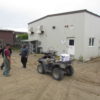
The met tower wind test site on the south edge of Levelock measured a moderate Class 3 (on a scale of 1 to 7) wind resource. This offers potential for wind power development, but perhaps best in a battery storage configuration with a grid-forming converter. Note that although the alternate site considered for the met […]
Brevig Mission
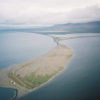
Identifying a wind power site in Brevig Mission is challenging because the airport with main and crosswind runways – with four approach and departure lanes to consider – constricts airspace more than typical single runway airports. A stronger wind resource is predicted in the mountains north and northeast of Brevig Mission, but the peaks and […]
Elim
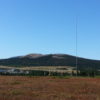
Elim has a marginal to moderate wind resource for wind power development, depending on the project site – the met tower location or possibly the dominating hill west of the airport – but the new Northern Power Systems NPS100C-24 wind turbine is expressly designed for lower wind class environments and modeling results predict the potential […]
Teller
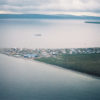
The electric utility for Teller and nearby Brevig Mission, Alaska Village Electric Cooperative, initiated a wind resource study in Teller in 2009 to identify a suitable site for wind turbines to supply Teller with wind energy. This initial effort focused on identifying a met tower site near Teller as project development construction costs would be […]
Yukon Wind Site Inventory
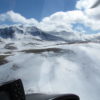
For its 2016 planning cycle, the Yukon Energy Corporation (YEC) investigated renewable energy sources via assessments by sector experts. The assessments were designed to inform YEC of the potential viability of each power generation resource in Yukon, identify suitable sites, estimate capital and operating costs, and determine the resulting per kWh power generation cost. These […]
Selawik
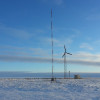
Selawik’s has a low-to-moderate wind resource, measured as class 2 (on a scale of 1 to 7). Although the wind resource in Selawik is modest compared to that in nearby Kotzebue, development of renewable energy in Selawik models is potentially viable with use of new wind turbine models specifically designed for lower wind speed environments. […]
Delta
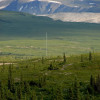
The Coal Mine Road Site 10 met tower location exhibits some unusual wind power characteristics. Although the wind power density calculates as a solid wind power class 6 (measured on a scale of 1 to 7) wind resource, the mean annual wind speed is that of a class 2 wind resource. This is due to […]
Tok

The wind resource measured at the 7-Mile Ridge met tower site near Tok is good with measured wind power class 4 by measurement of wind power density and wind speed. The site experiences very low wind shear which is ideal for constructability as lower hub heights are possible. On the other hand, a Venturi effect […]
Napaskiak
Napaskiak’s wind resource is marginal as wind power class 2 (on a scale of 1 to 7). This contrasts with the Class 4 wind resource measured on the hill behind neighboring Napakiak, across the Kuskokwim River. This lower wind resource is due to Napaskiak’s low elevation location on the south bank of the Kuskokwim River. […]
Napakiak
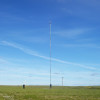
Napakiak’s wind resource is very good as wind power class 4 (on a scale of 1 to 7) with excellent characteristics for wind power development. Note that although the village of Napakiak itself is not particularly windy given its location on the banks of the Kuskokwim River, the prospective wind power site (and site of […]


